


ACSI Research Fellow Program
The Research Fellowship program at ACSI offers a unique opportunity for talented researchers to contribute to advancing the field of Christian education while addressing critical global challenges. By fostering collaboration, knowledge exchange, and innovative research, the program aims to make a significant impact on the world stage.
Program Aims:
- Create a vibrant and inclusive international research community.
- Foster collaboration, knowledge exchange, and innovative solutions to address both US and global challenges through research projects in Christian education.
Program Oversight:
- The fellows will collaboratively work with ACSI’s research department and Thought Leadership and the Research Director will oversee the program.
ACSI Fellows Collaborate on Research to Advance Faith-Based Education
ACSI Fellows collaborate with the Thought Leadership team (Research Department) to develop research and Working Papers on important topics in education, spirituality, and culture, focusing on their impact within the realm of Christian education. Their work addresses current trends and challenges, offering valuable insights for advancing faith-based learning.

RiB is a biannual publication by ACSI, aimed at sharing the latest research findings and insights on the Christian school sector. It is available exclusively to ACSI member school and is managed by ACSI Director of Research.
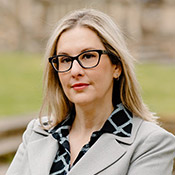
Lynn Swaner Ed.D.
President of Cardus USA – ACSI Senior Research Fellow

Matthew Lee, Ph.D.
Clinical Assistant Professor of Economics at Kennesaw State University - ACSI Senior Research Fellow

Francis Ben, Ph.D.
Associate Professor & Head of Postgraduate Coursework and Research at Tabor College Adelaide Australia – ACSI Global Research Fellow

Alison Heape Johnson
PhD candidate at the University of Arkansas – ACSI Junior Research Fellow
Eligibility:
- Understanding of Christian education.
- Strong academic credentials (e.g., relevant degrees, publications, minimum a Ph.D. candidate in education programs for Junior Fellow and a Ph.D. or Ed.D. for Senior Fellow).
- Demonstrated research excellence.
- Experience in international research collaboration.
- Excellent English communication skills.
- Minimum five years experience of doing research.
Nomination and selection process:
- The selection of the fellows is done through ACSI’s internal nomination.

Your School Is Growing. Is Your Board?
Three governance essentials for Christian school leaders navigating a growth environment
Something significant is happening in American education. Families are moving — away from traditional public schools and toward independent, charter, classical, home, and faith-based alternatives. Charter school enrollment has grown by nearly 500,000 students since 2019, a 15 percent increase, while district public schools have lost close to two million students over the same period. Independent schools now serve more than one million students nationally, more than double the number from just five years ago. In schools like yours, 69 percent of enrollment gains are attributed to something as straightforward as values alignment, or what we sometimes refer to as the value proposition. Parents aren't just looking for a better academic experience. They’re looking for a school that stands for something, a feeling that connects them to the mission and to the belief in Christian education.
That's good news — and it's exciting. Because a school that grows quickly without governance that can keep pace is a school that has introduced new risk under the banner of success. I've seen it happen more times than I care to count. Enrollment surges. The head of school is stretched in too many directions. The board celebrates the numbers and assumes everything must be working. And the governance infrastructure that will determine the school's next decade quietly starts to unravel.
If your school is in a season of growth, or if it is a part of the school’s vision, here are three factors to seriously consider.
1. Does your board understand that it is the single largest contributor to your school's growth — or its decline?
Most heads of school would say their board is supportive. What I find, when I sit down with boards and ask harder questions, is that support is often passive, not purposeful. Board members show up, approve the budget, and cheer for the school. What role do they play in a crisis? What happens to trust and unity? What they don’t always do is function as a genuinely unified team — advocating for the school in their communities, holding firm on mission when the pressure mounts, providing the consistent and intentional support that makes sustained leadership possible. Support is not the same as unity. And unity is what effective governance requires.
There is a direct, provable correlation between the health of a governing board and the enrollment trajectory of the school it oversees. When a Christian school grew by 25 percent in a single year — a remarkable result — the analysis of what drove that growth pointed not primarily to the marketing team or the curriculum or the facilities. It pointed to an exceptionally healthy board. The board worked as a team, had a shared vision of who they were and who they wanted to become. It supported the head without interference. That created the conditions and culture for everything else to work.
If your board doesn't know its own mission statement word for word or unable to articulate it in their own words then the work of the board has already become disconnected from the mission it exists to protect and promote.
2. Are you recruiting board members, or are you filling seats?
Growth environments put enormous pressure on the trustee recruitment process, and that pressure usually produces shortcuts. Someone has a friend who runs a successful business. There's a parent who is enthusiastic and well-connected. The board needs bodies, and these people are available. So, they're asked — sometimes casually, sometimes in a setting that communicates the wrong level of seriousness about what's being asked. Genuine expectations were not discussed. There is an absence of role clarity.
The recruitment process is where board culture is either built or eroded. Every ineffective trustee you bring onto the board was recruited by someone who didn't ask the right questions, set the right expectations, or conduct the process with the gravity it deserves. The committee on trustees — or governance committee — exists precisely to prevent this. When that committee is active, intentional, and working from a clear matrix of what skills and perspectives the board actually needs, the board gets stronger over time. When it's passive or nonexistent, the board drifts.
The best thing that can be said to a prospective trustee is also the most honest: This is a serious responsibility. Here is what it requires of you. Here is what we expect. And here is what is at stake for the students and families who have trusted this school with something that matters enormously to them. Are you prepared to accept that?
3. Are your bylaws protecting your mission — or are they just a document no one has read recently?
Christian schools have made an intentional choice about who they are. That identity is embedded in the mission statement, reflected in the hiring practices, lived out in the classroom. But mission drift doesn't announce itself. It comes gradually, through small decisions made by well-meaning people who weren't anchored to the founding purpose. And the document that should prevent this — the bylaws — is often outdated, inconsistently applied, or unknown to the very people responsible for upholding it.
Term limits that exist but aren't enforced. Chair succession language that's ambiguous. Committee structures that no longer match how the school actually operates. These aren't administrative footnotes. They are governance failures waiting to become crises. The bylaws define how the board manages itself, resolves conflict, and protects the school when things get hard. A growth environment, with new families, new staff, new trustees, and new pressures, is exactly the moment to make sure those documents are current, clear, and followed.
Are you flourishing or merely surviving? The schools that will flourish in this environment aren’t just the ones with the best programs or the sharpest marketing. They’re the ones with governance that’s healthy enough to sustain what growth demands — and honest enough to catch the problems before they become irreversible.
That is where the work begins. Not in the enrollment numbers, not in the marketing campaign, not in the next strategic plan — but in the board room, in the quality of the people seated around that table, and in the clarity with which they understand why they are there. When a board is healthy, a school can do almost anything. When it is not, even the best head of school struggles to lead with confidence.
Leave a comment