


ACSI Research Fellow Program
The Research Fellowship program at ACSI offers a unique opportunity for talented researchers to contribute to advancing the field of Christian education while addressing critical global challenges. By fostering collaboration, knowledge exchange, and innovative research, the program aims to make a significant impact on the world stage.
Program Aims:
- Create a vibrant and inclusive international research community.
- Foster collaboration, knowledge exchange, and innovative solutions to address both US and global challenges through research projects in Christian education.
Program Oversight:
- The fellows will collaboratively work with ACSI’s research department and Thought Leadership and the Research Director will oversee the program.
ACSI Fellows Collaborate on Research to Advance Faith-Based Education
ACSI Fellows collaborate with the Thought Leadership team (Research Department) to develop research and Working Papers on important topics in education, spirituality, and culture, focusing on their impact within the realm of Christian education. Their work addresses current trends and challenges, offering valuable insights for advancing faith-based learning.

RiB is a biannual publication by ACSI, aimed at sharing the latest research findings and insights on the Christian school sector. It is available exclusively to ACSI member school and is managed by ACSI Director of Research.
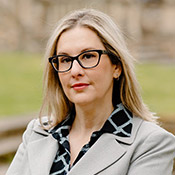
Lynn Swaner Ed.D.
President of Cardus USA – ACSI Senior Research Fellow

Matthew Lee, Ph.D.
Clinical Assistant Professor of Economics at Kennesaw State University - ACSI Senior Research Fellow
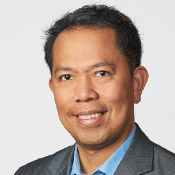
Francis Ben, Ph.D.
Associate Professor & Head of Postgraduate Coursework and Research at Tabor College Adelaide Australia – ACSI Global Research Fellow

Alison Heape Johnson
PhD candidate at the University of Arkansas – ACSI Junior Research Fellow
Eligibility:
- Understanding of Christian education.
- Strong academic credentials (e.g., relevant degrees, publications, minimum a Ph.D. candidate in education programs for Junior Fellow and a Ph.D. or Ed.D. for Senior Fellow).
- Demonstrated research excellence.
- Experience in international research collaboration.
- Excellent English communication skills.
- Minimum five years experience of doing research.
Nomination and selection process:
- The selection of the fellows is done through ACSI’s internal nomination.
Supporting Student Well-Being in Christian Schools: What Graduates Teach Us About Mental Health, Spiritual Formation, and School Environment
There is a mental health crisis among American children. Mental health concerns among adolescents continue to rise, with more than eight million children ages 3–17 experiencing a diagnosed mental or behavioral health condition (CDC, 2024). Research suggests that students in public and Protestant schools report similar mental health concerns (Swaner et al., 2024), and most mental health conditions emerge before age 18 (Velasco et al., 2020). Because schools are often the first place where concerns are observed, Christian schools have a unique opportunity to support students through positive relationships, spiritual formation, and access to mental health resources.

Methodology:
This qualitative phenomenological study explored the lived experiences of 13 graduates from ACSI member high schools across four states. Participants graduated between 2020 and 2025 and completed semi-structured interviews focused on mental health, spiritual formation, school environment, and access to mental health support and resources.
Findings:
After a thematic analysis of the data, five themes emerged as key components of the graduates' lived experiences.
The commonality of mental health challenges:
Most participants described experiencing stress, anxiety, depression, or other mental health challenges during high school.
The influence of the school environment on an individual’s high school experience:
Small school environments often fostered a sense of belonging and connection, but some graduates raised concerns about confidentiality and professional boundaries. Graduates described times when they felt unsure about whom to approach if they had something difficult and confidential to discuss, as they didn’t want to become the topic of conversation within the school community.
The power of relationships:
Trusted adults, including teachers, counselors, coaches, and administrators, often had a lasting impact on students' mental health and spiritual development. Relationships impacted individuals both positively and negatively. Some students looked to the adults in the building as spiritual mentors and people with a Godly influence on their spiritual journey. Other participants recalled relationships that were hurtful and judgmental, leaving a negative imprint on them both emotionally and spiritually.
The connection between spiritual and mental health:
Participants consistently described a relationship between their spiritual growth and emotional well-being, though experiences varied. To illustrate, I created a timeline based on two participants (pseudonyms have been assigned), showing how their life experiences aligned in many ways, yet their spiritual and mental health journeys went in opposite directions.

The school’s response to mental health:
Graduates from schools with licensed school counselors and intentional mental health programming reported more positive experiences and greater access to support. Participants described three types of experiences: schools with limited mental health resources, where counselors in the building did not have positive relationships with students; schools that relied on trusted adults rather than formal counselors and trained professionals; and schools with licensed school counselors who provided proactive mental health education and support. Graduates from the latter group reported the most comprehensive support.
Each participant was asked the question: If you could go back and wish for one thing that your high school would have changed regarding mental health support, what would that be? Here is what they had to say in their own words (pseudonyms assigned).

Implications for School Leaders:
The findings suggest that Christian schools should prioritize access to licensed school counselors and evidence-based mental health programming. While Christian schools have historically emphasized academic achievement and spiritual formation, participants consistently described mental health support as foundational to both. Investing in mental health resources may strengthen students' academic success, spiritual growth, and overall well-being.
The average private high school has an enrollment of 257.7 (258) students (National Center for Education Statistics (NCES), 2021). According to the latest data from the CDC, of those 258 students, hypothetically, 102 (39.7%) would likely experience persistent sadness and hopelessness; 74 (28.5%) would likely struggle with poor mental health; 53 (20.4%) students would likely seriously consider attempting suicide, and 25 (9.5%) are likely to make a suicide attempt (Verlenden et al., 2023). These numbers are staggering, and mental health must be addressed in our schools by trained and licensed school counselors or other mental health professionals to offer a culture of care and an environment that promotes well-being.
References:
Centers for Disease Control and Prevention. (2024, May 15). Data and statistics on children's mental health. U.S. Department of Health and Human Services. https://www.cdc.gov/children-mental-health/data-research/index.html
National Center for Education Statistics. (2021). Private school universe survey. U.S. Department of Education. http://nces.ed.gov/pubsearch/pubsinfo.asp?pubid=2021061
Swaner, Lynn E., Albert Cheng, and Jonathan Eckert. “School-Sector Influence on Graduate Outcomes and Flourishing: Findings from the 2023 Cardus Education Survey.” Cardus, 2024. https://www.cardus.ca/research/education/reports/school-sector-influence-on-graduate-outcomes-and-flourishing
Swaner, Lynn E., Rian Djita, and Adam Wilson. “Mental Health and Well-Being in Christian Schools: Educators’ Perspectives.” Cardus, 2026. https://www.cardus.ca/research/education/reports/mental-health-and-well-being-in-christian-schools/
Velasco, A., Cruz, I. S. S., Billings, J., Jiménez, M., & Rowe, S. (2020). What are the barriers, facilitators and interventions targeting help-seeking behaviours for common mental health problems in adolescents? A systematic review. BMC Psychiatry, 20(1), 293. https://doi.org/10.1186/s12888-020-02659-0
Verlenden JV, Fodeman A, Wilkins N, et al. Mental health and suicide risk among high school students and protective factors — Youth Risk Behavior Survey, United States, 2023. MMWR Suppl 2024;73(Suppl-4):79–86. http://dx.doi.org/10.15585/mmwr.su7304a9
Leave a comment